
Horror Is a Mother
What does that mean, “horror is a mother”? “Horror” signifies the trembling fear one experiences in the face of something terrifying. “Mother” represents the opposite, doesn’t it? She is the one who protects you from the terrifying. But what if the thing that ultimately “protects you” from the terrifying is the thing itself?
My mother loves horror. She would probably refute this statement, or want to qualify it, because these days when someone says “horror” they usually mean the tremendous new wave of the genre (which is fantastic, in my opinion). My mom loves horror in the vein of Alfred Hitchcock, Stephen King, and maybe a little bit of David Lynch. People today would probably say that Hitchcock and Lynch are more “noir and uncanny” than horror creators. But then … Psycho?? The Birds?? We all know these films belong squarely in the horror category. As does Twin Peaks, Mulholland Drive, and Lost Highway.
The emotion of horror, the trembling fear, that is something we’ve all experienced in real life. As I’ve grown older, and especially over these past few years writing my own horror novel, I’ve begun to reflect on why I gravitated so surely and so steadily toward the horror genre. I came up with these two answers: 1) I inherited it. And 2) I was, in an important way, sustained by it.
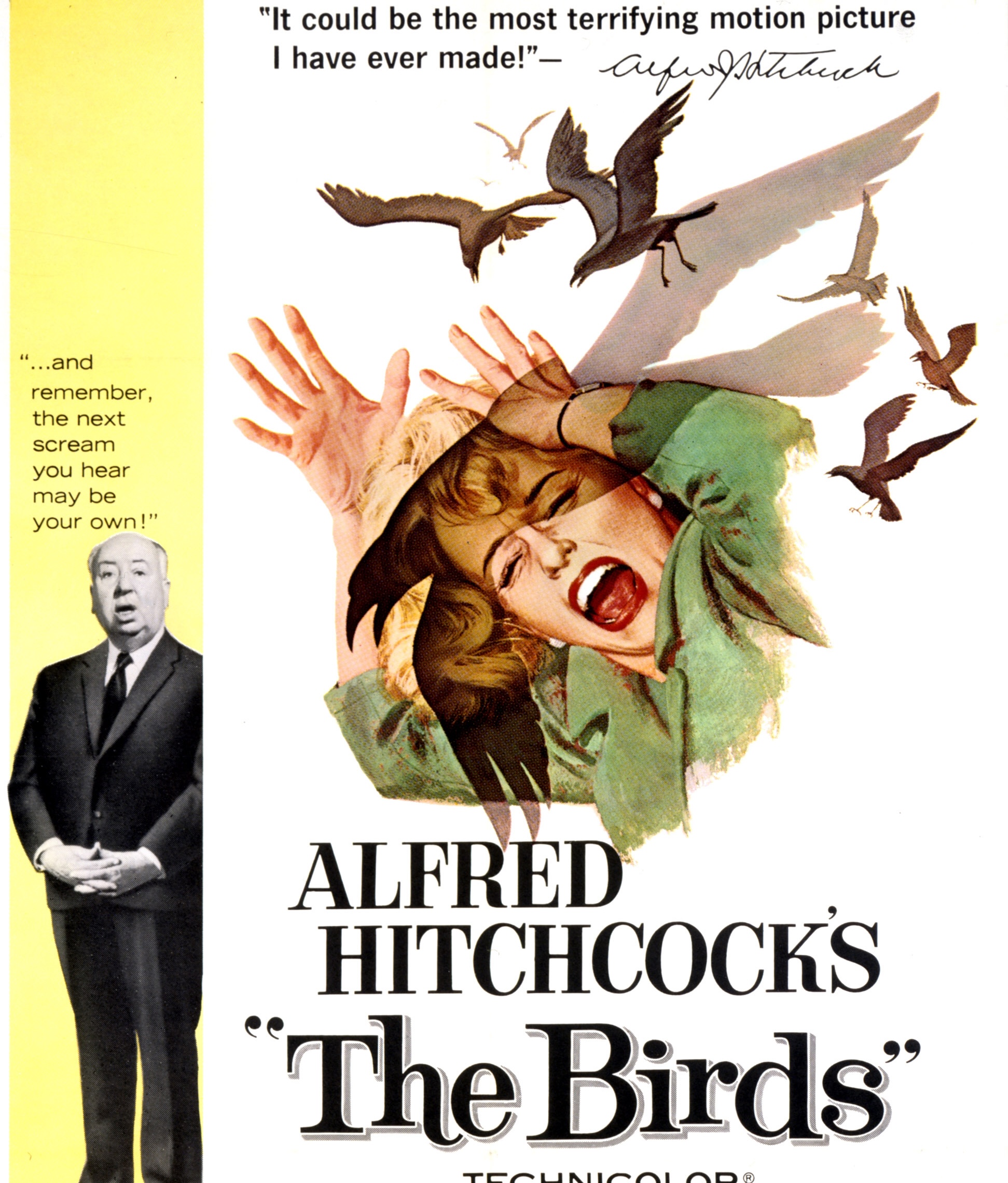
1963 movie poster for "The Birds"
My love of horror’s true beginning had to be my mother’s mind. Her fondness for noir, mystery, and the smart horror book and film formed long before my twin Karen and I were born. It seeped into our shared DNA.
I asked my mom recently, what was the first Alfred Hitchcock film she saw? She said: “I remember seeing Psycho in a theater in Galesburg [Illinois, where she grew up], but I was only fourteen when that came out… That movie terrified me. On later viewings I could appreciate it more, but it is not a favorite of mine. I know I saw The Birds at a theater, I think in Denver in 1963.” I have to take a moment to revel in how amazing that would have been, to see those films as they were first released in the theater—the only way to see them at the time, of course—rather than on a tv screen.
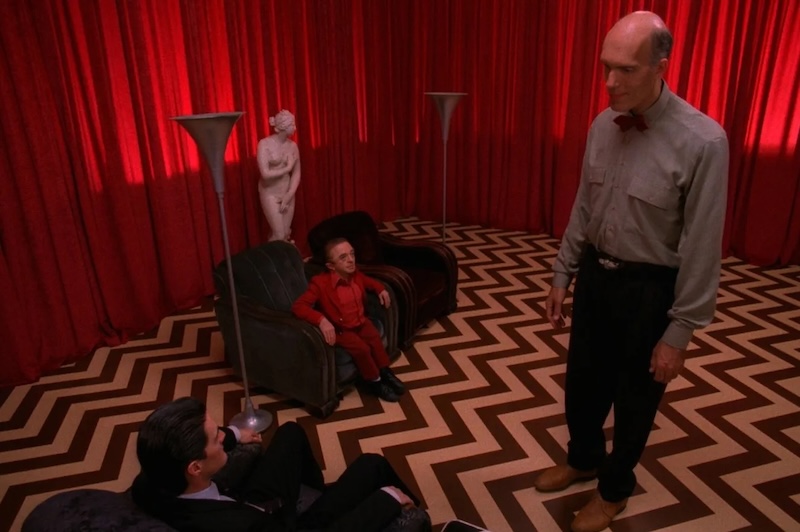
By the time David Cronenberg’s Dead Ringers came out, when we were thirteen—right as our consciousness peaked—we’d already been watching Alfred Hitchcock films and reading Agatha Christie murder mysteries. Tuesday nights in high school, we tuned into Twin Peaks with our mom. Genetically and environmentally (nature and nurture!), my “inheritance” of the genre began in the blood, and at home.
I first noticed the effects of this when I started writing short stories in high school. Every time I set out to create a “realist” scene, the feeling would swerve: a strange grin would appear on a character’s face, a window would darken. For the next several years, my fiction writing defaulted to the uncanny, the weird. And finally, to all-out horror.
Around that time in high school, I was up a lot at night, with nightmares and crazy thoughts and dark hallucinations. Sometimes they required my sleeping in my twin’s bed (thankfully she never got scared like I did). Looking back, I can’t help but see the connection between those night terrors and writing. I see now that I was learning how to confront my fears. I was learning how to live with and on them, because there was no avoiding the fact that they fueled my imagination.
When I say that horror is a mother, I mean that horror fed me. It raised me and helped me to grow as a writer and to find my place in fiction. And we can argue the definition because, in truth, the horror that fed me was Shirley Jackson and Daphne du Maurier, and more recently Samanta Schweblin and Helen Oyeyemi—authors also squarely in the “uncanny.” But what comes from these brilliant minds (like my own mom’s brilliant mind) is a refusal to be satisfied with the mundane, the un-tricky. A thirst for more comes from these “moms,” and when we get what we thirst for, we can be fed and we can grow.
There is also the fundamental truth about parenting, I think, which is, if you want your children to succeed you will have to let them fail, on their own. If you want your daughter to face her fears you will have to let her face fear, on her own. The thing that horror offers is a safe place in which to do just that and make it out on the other side. I think of The Blair Witch Project, a movie after which I went out into the daylight blinking and shaking, but also triumphant. Or Poltergeist, which I watched at a sleepover party and never looked away. Afterward I reveled in nothing but accomplishment. I’d made it out alive!
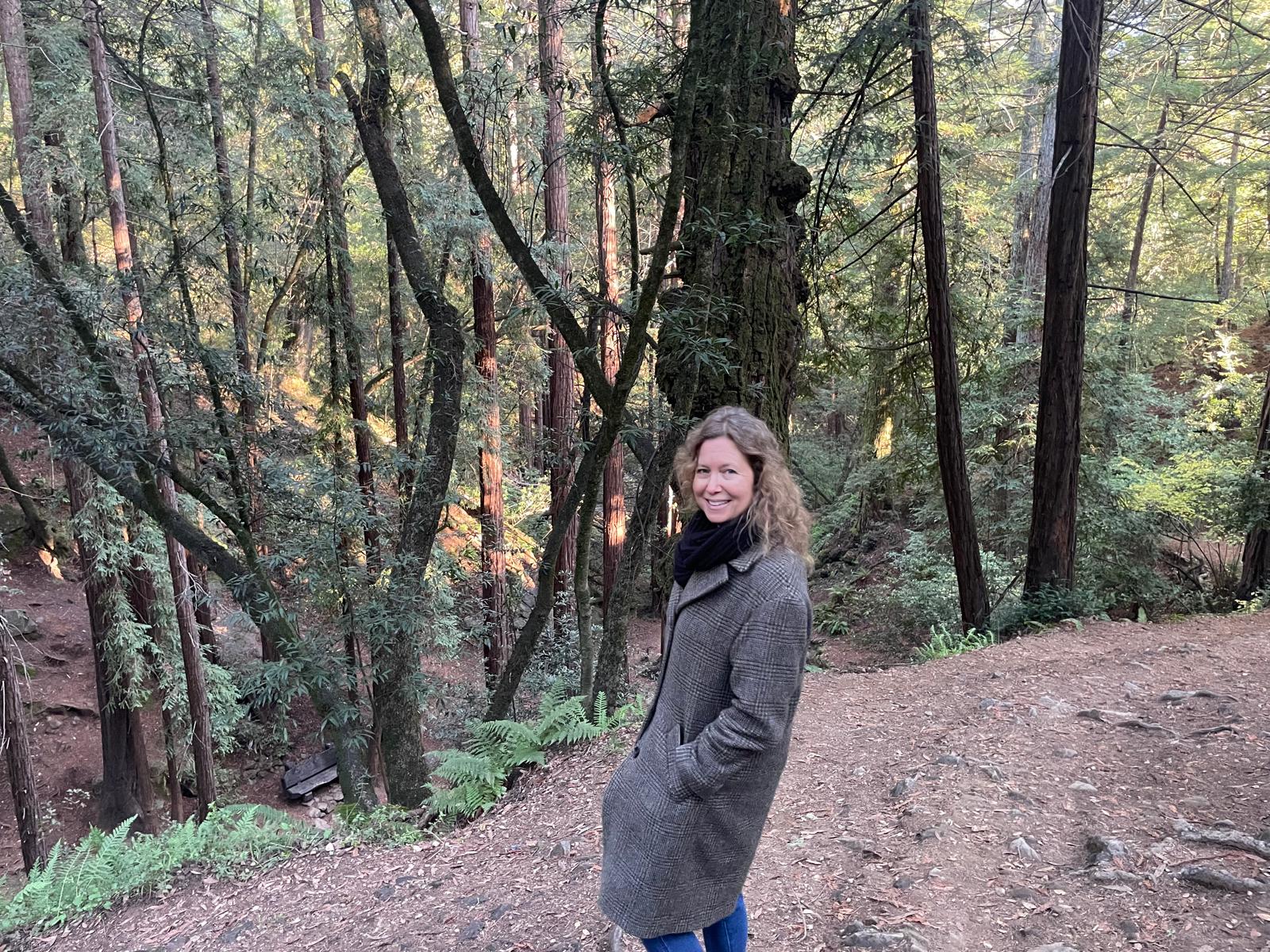
Me, where I grew up.
I’ll never forget the book recommendation my mom offered my older son when he was about sixteen. This happened on the heels of the Covid-19 pandemic all but obliterating my son’s lifelong passion for reading. I must have mentioned the fact that he was reading less to my mom, because one afternoon she suggested he read The Exorcist by William Peter Blatty. I was thrilled with this idea! Because what she really offered him was a chance to get excited about reading again. To throw himself into a (truly terrifying) book and make it to that final sentence. To close the cover, shivering.
My mother offered that safe place. Which can be a novel, or a film, or a painting, or a song—art!—where we can all go to confront the terrifying. And live beyond it.
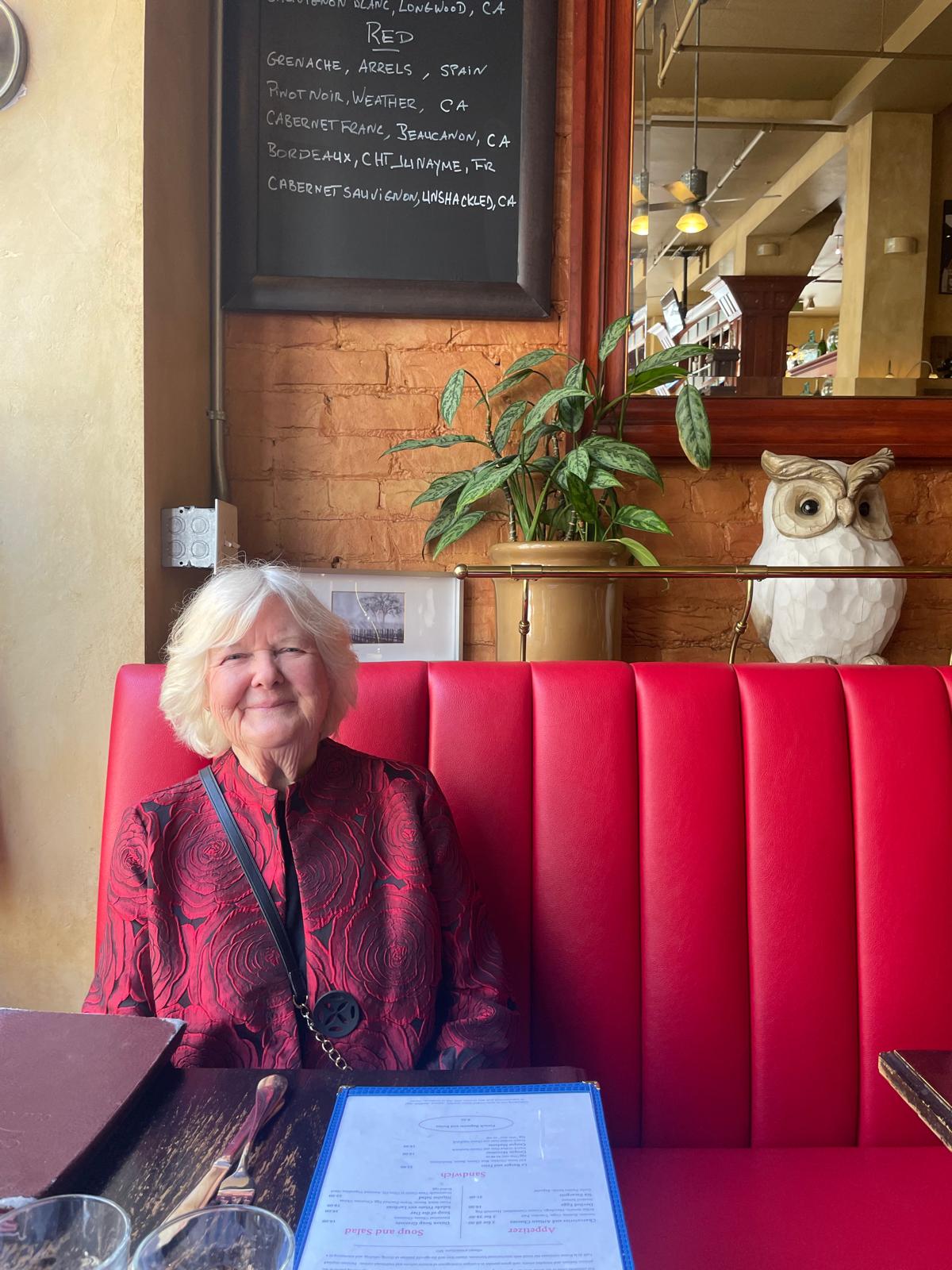
My mom, in San Francisco.
Visit me on Substack to subscribe for free, thank you!